
Buttercream vs. Whipped Cream Frosting: The Ultimate Baker’s Showdown
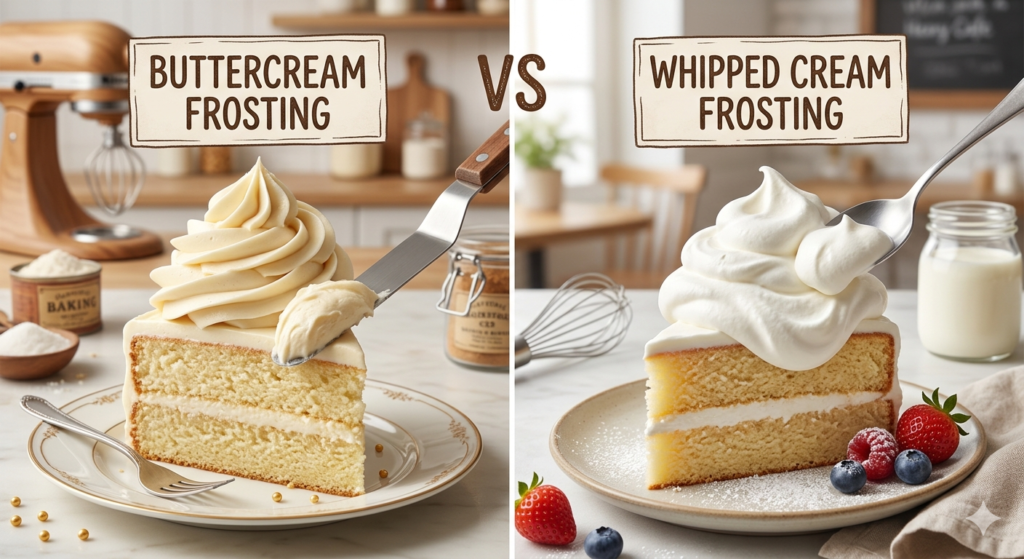
When it comes to finishing a cake, the crowning glory is always the topping. However, the eternal debate of buttercream vs. whipped cream frosting often leaves bakers—both amateur and professional—torn. When analyzing the technical differences of buttercream vs whipped cream frosting, it becomes clear that the choice is about more than just personal preference; it’s about structural integrity .
In this guide, we will dive deep into the world of buttercream vs. whipped cream frosting to help you decide which sugary mantle deserves a place on your next dessert.
This guide serves as the ultimate resource for resolving the buttercream vs. whipped cream frosting dilemma for your next project
For a formal wedding where the cake acts as a centerpiece for 5 hours, buttercream is the standard. For a casual Sunday brunch or a summer birthday party at home, whipped cream frosting offers a nostalgic, homemade feel.
Defining the Contenders
Before we compare them, we need to understand what exactly makes these two frostings tick .
What is Buttercream Frosting?
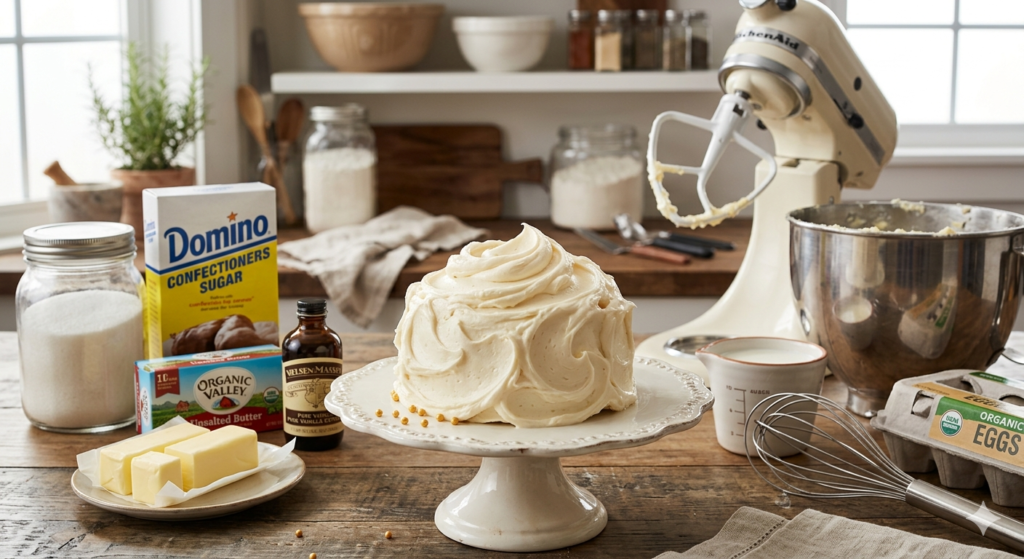
Buttercream is a powerhouse in the baking world. At its most basic (American Buttercream), it is a mixture of softened butter and confectioners’ sugar beaten until creamy. However, the world of buttercream is vast, including:
Swiss Meringue: Silky and less sweet, made with egg whites.
Italian Meringue: Stable and glossy, made with hot sugar syrup.
French Buttercream: Rich and custard-like, using egg yolks.
What is Whipped Cream Frosting?
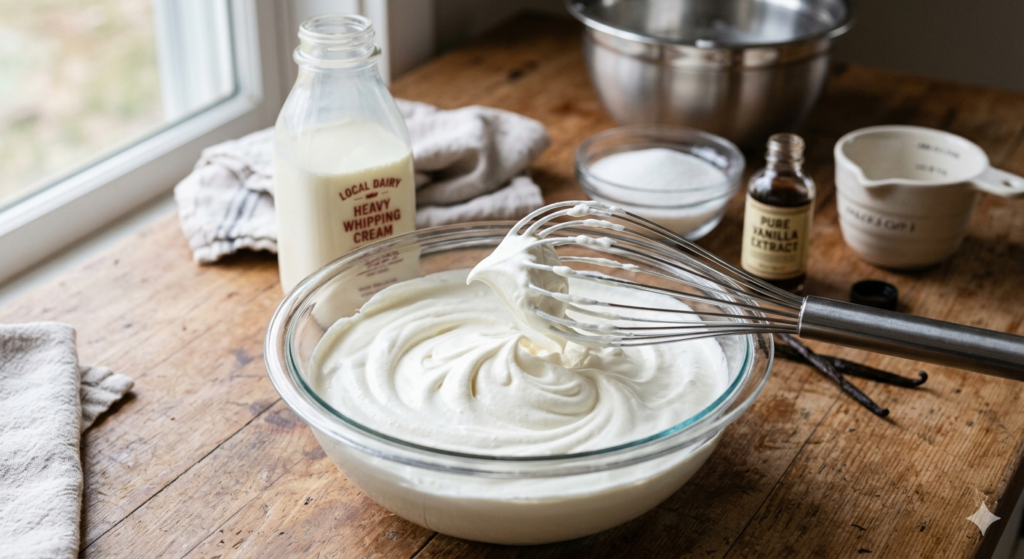
Whipped cream frosting is the lighter, airier cousin. It is primarily made by whipping heavy cream until it reaches stiff peaks. To make it a true frosting, it is usually sweetened with powdered sugar and often “stabilized” with gelatin, cornstarch, or mascarpone to prevent it from melting or weeping. It is prized for its cloud-like texture and fresh dairy flavor.
Buttercream vs. Whipped Cream Frosting:
Texture and Taste
The sensory experience of buttercream vs. whipped cream frosting is where the differences are most apparent.
Ultimately, the choice of texture in the buttercream vs. whipped cream frosting debate depends on whether you want a rich melt or a light dissolve .
The Texture Profile -
Buttercream: Dense, smooth, and malleable. It can be whipped to be light, but it always maintains a certain “weight.” It hardens slightly in the fridge, providing a satisfying bite.
Whipped Cream: Light, bubbly, and ethereal. It dissolves almost instantly on the tongue. It never truly “sets” hard, remaining soft and delicate .
The Taste Factor -
Buttercream: Sweetness is the headline here. Because of the high sugar-to-fat ratio, buttercream is a sugar-lover’s dream. It carries flavors like vanilla, chocolate, or salted caramel very intensely.
Whipped Cream: Subtle and refreshing. It tastes like fresh milk and cream. It isn’t nearly as sweet as buttercream, making it the perfect partner for fruit-based desserts.
Stability and Consistency: The Logistics of Frosting
If you are planning an outdoor event, the buttercream vs. whipped cream frosting debate becomes a matter of physics.
Feature |
Buttercream |
Whipped Cream |
| Heat Resistance | Moderate (High for Meringue types) | Very Low (Melts easily) |
| Pipeability | Excellent (Holds sharp edges) | Good (Soft edges) |
| Shelf Life | Long (Days at room temp) | Short (Requires refrigeration) |
| Weight Bearing | High (Supports heavy layers) | Low (Can collapse under weight) |
Buttercream is the king of stability. Because butter is a solid at room temperature, the frosting holds its shape well. Whipped cream frosting, however, is essentially trapped air bubbles in liquid fat. Even when stabilized, it is prone to wilting in humidity or high heat.
When to Use Which Frosting?
Choosing between buttercream vs. whipped cream frosting often depends on the “job” the frosting needs to do.
To simplify the decision of buttercream vs. whipped cream frosting, let’s look at specific scenarios.
Use Buttercream When:
You are Pining for Detail: If you want sharp rosettes, intricate borders, or palette knife flowers, buttercream is your only choice.
The Cake is Multi-Tiered: The structural strength of buttercream helps hold heavy cake layers in place without sliding.
The Event is Outdoors: If you’re at a summer wedding, buttercream (especially Italian Meringue) will survive much longer than cream.
Use Whipped Cream When:
The Cake is Fruit-Forward: Think Strawberry Shortcake or a light sponge with berries.
The Crowd Prefers “Not Too Sweet”: It’s the ideal choice for those who usually scrape the frosting off their cake.
Immediate Consumption: If you’re serving the cake straight from the fridge to the table.
As you can see, the application dictates the winner of the buttercream vs. whipped cream frosting contest .
Best Frosting for Different Types of Cakes
The “body” of your cake should dictate your topping. In the buttercream vs. whipped cream frosting battle, pairing matters.
Pound Cakes and Mud Cakes: These are heavy, dense cakes. They require the richness of buttercream to match their intensity.
Chiffon and Sponge Cakes: These are light and airy. A heavy buttercream might crush them, so whipped cream frosting is the traditional and textural match.
Cupcakes: Generally, buttercream is preferred for cupcakes because it allows for that iconic “high swirl” that stays put during transport.
Considerations: Weather, Occasion, and Storage
When deciding on buttercream vs. whipped cream frosting, look at your environment.
The Weather Factor -
If the temperature exceeds 25C (77F) , whipped cream will begin to lose its structure within minutes. Buttercream is sturdier, though even butter begins to melt at 32C (90F) . If you are in a tropical climate, a shortening-based buttercream or a stabilized meringue buttercream is the safest bet.
The Occasion -
For a formal wedding where the cake acts as a centerpiece for 5 hours, buttercream is the standard. For a casual Sunday brunch or a summer birthday party at home, whipped cream frosting offers a nostalgic, homemade feel.
Common Mistakes to Avoid
Whether you choose buttercream vs. whipped cream frosting, pitfalls await the unwary baker.
Buttercream Blunders -
Using Cold Butter: This leads to “clumpy” frosting. Your butter must be $18-20^{\circ}C$ for a perfect emulsion.
Under-beating: If you don’t beat the butter long enough before adding sugar, it will taste like a stick of grease rather than a fluffy cloud.
Whipped Cream Errors:
Over-whipping: There is a 5-second window between “stiff peaks” and “butter.” If it looks grainy, you’ve gone too far.
Skipping Stabilizer: If you are frosting a whole cake with whipped cream, you must use a stabilizer (like unflavored gelatin or a bit of cream cheese) or it will weep liquid into your cake layers.
Mastering these tips ensures that regardless of where you stand on buttercream vs. whipped cream frosting, your final product will be professional.
Conclusion: Which One Should You Choose?
In the final tally of buttercream vs. whipped cream frosting, there is no objective winner—only the right tool for the job.
If your goal is a masterpiece of edible architecture that can stand the heat and wow the crowd with intricate designs, buttercream is your champion. It offers versatility, durability, and a classic sweetness that defines celebration.
However, if you prioritize a light, refreshing finish that lets the flavor of the cake and fresh fruit shine through, whipped cream frosting is unparalleled. It is the sophisticated choice for those who value subtlety over sugar.
Ultimately, the choice of buttercream vs. whipped cream frosting comes down to the balance of flavor and function. Why not try both? A sturdy buttercream exterior with a light whipped cream and berry filling often provides the best of both worlds!
Pingback: 10 PRO TIPS FOR DECORATING CAKES LIKE A PASTERY CHEF - meltinmouths