
ESSENTIAL BAKERY TERMS YOU SHOULD KNOW
The Ultimate Glossary for Aspiring Bakers and Pastry Lovers
Stepping into a professional kitchen or opening a high-end cookbook can sometimes feel like entering a foreign country. The language of baking is precise, technical, and steeped in history. If you want to elevate your skills from a casual hobbyist to a confident artisan, mastering the essential bakery terms you should know is the first step. Understanding these terms doesn’t just help you follow instructions; it helps you understand the “why” behind the science of baking, ensuring consistent results every time you preheat your oven.
Cake Anatomy Basics
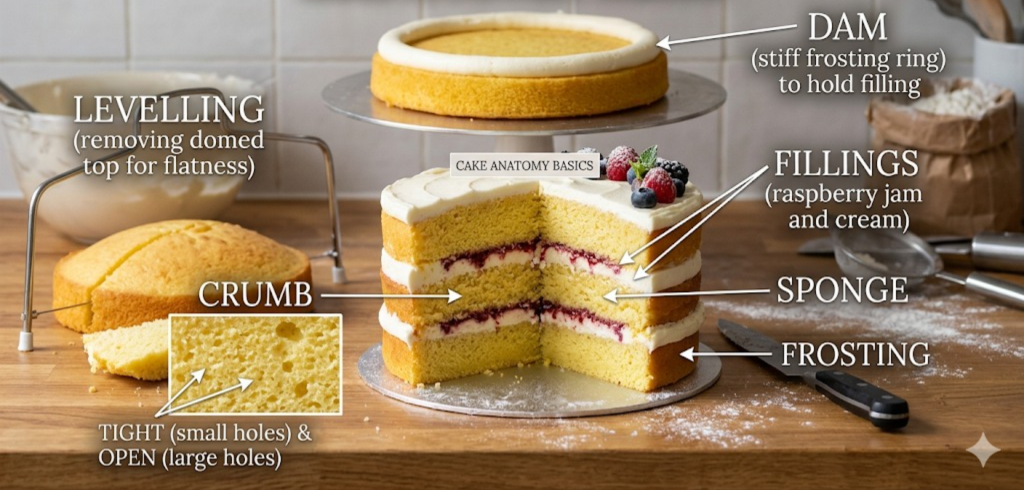
Before diving into complex textures, every baker must understand the structural foundation of their creations. This section of essential bakery terms you should know focuses on the physical components of a cake.
Sponge: The core of most cakes, usually referring to a light, airy crumb achieved through whipped eggs or chemical leaveners.
Crumb: The internal texture of a cake or bread, described as “tight” (small holes) or “open” (large holes).
Dam: A ring of stiff frosting piped around the edge of a cake layer to keep soft fillings from leaking out.
Levelling: The process of removing the domed top of a cake to create a flat surface for stacking.
Understanding these essential bakery terms you should know ensures that your cakes are structurally sound and visually appealing before you even begin the decoration process .
Fillings and Flavours
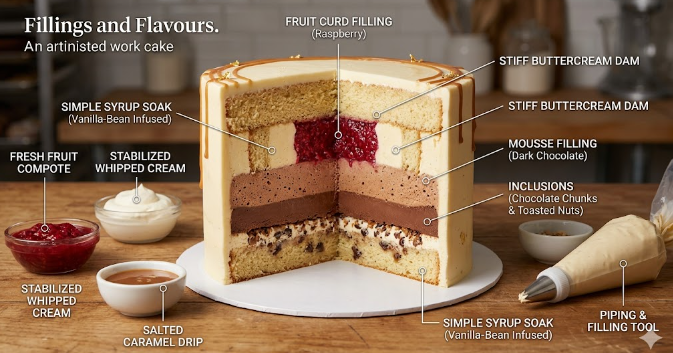
What’s inside a cake is just as important as how it looks on the outside. Developing a palate for essential bakery terms you should know regarding fillings will help you create balanced, gourmet desserts.
Ganache: A decadent mixture of chocolate and cream used as a filling or glaze.
Curd: A thick, creamy dessert spread typically made from citrus juice, sugar, and egg yolks.
Mousse: A light, aerated filling made by folding whipped cream or egg whites into a flavored base.
Simple Syrup: A liquid made of equal parts sugar and water used to moisten cake layers.
By mastering these essential bakery terms you should know, you can transform a basic sponge into a multi-layered masterpiece with complex flavor profiles.
Techniques and Methods
The way you handle your ingredients defines the final texture of the pastry. Here are the essential bakery terms you should know for superior mixing and dough handling.
Creaming Method: Beating softened butter and sugar together until light and fluffy to incorporate air.
Folding: Using a spatula to gently turn a mixture over itself to incorporate ingredients without deflating air bubbles.
Autolyse: A resting period for flour and water to fully hydrate before adding yeast or salt.
Bulk Fermentation: The “first rise” where dough develops flavor and strength through yeast activity.
Laminating: Folding fat into dough and rolling it multiple times to create hundreds of layers, as seen in croissants.
Internalizing these essential bakery terms you should know allows you to troubleshoot issues in real-time, such as why a cake is dense or why bread lacks a proper rise.
Coatings and Finishes
A professional look starts with the right exterior. These essential bakery terms you should know cover the various ways to “dress” a cake or pastry.
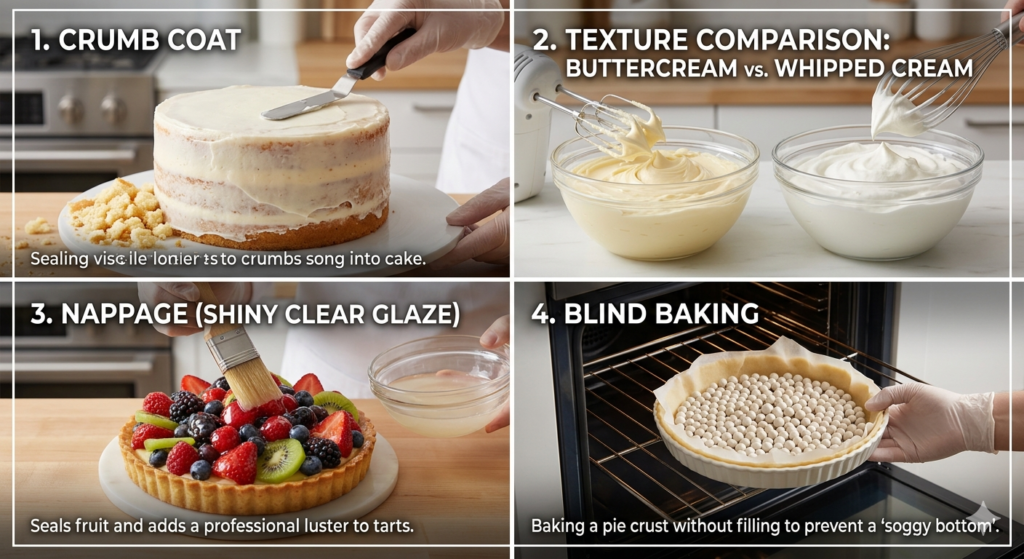
Crumb Coat: A thin layer of frosting applied to seal in crumbs before the final decorative layer.
Buttercream: A versatile frosting made from butter and sugar, available in American, Swiss, or Italian varieties.
Whipped Cream: A light, aerated coating made by beating heavy cream until it reaches soft or stiff peaks, often stabilized for better shelf life.
Nappage: A clear apricot glaze used to seal fruit and add a professional luster to tarts.
Blind Baking: Baking a pastry shell without its filling to prevent a “soggy bottom”.
Knowing these essential bakery terms you should know ensures that your final product has a clean, polished appearance that rivals any professional bakery window.
Decoration and Presentation
Once your cake is coated, it’s time for the artistry. The following essential bakery terms you should know focus on the aesthetic elements of baking.
Piping: Using a pastry bag and various tips to create borders, flowers, or writing.
Royal Icing: A hard-drying icing made from egg whites and powdered sugar, perfect for intricate cookie designs.
Scoring: Cutting the top of dough with a blade (lame) to control expansion and create decorative patterns.
Docking: Pricking small holes in dough to allow steam to escape so the pastry stays flat during baking.
Utilizing these essential bakery terms you should know will help you describe your vision to clients or follow advanced tutorials with ease.
Chocolate and Sugar Work
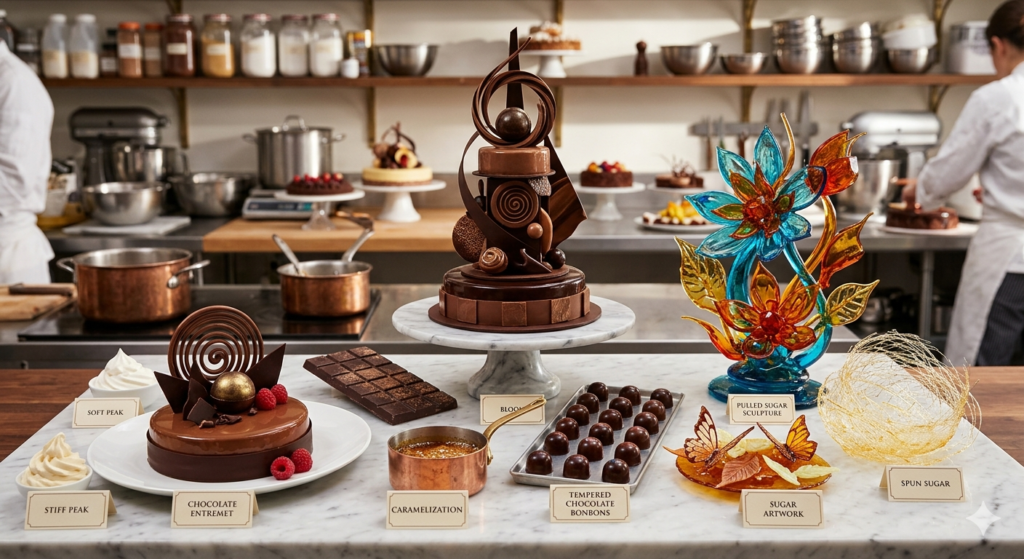
For those looking to enter the realm of high-end confectionery, these essential bakery terms you should know are vital.
Tempering: The process of heating and cooling chocolate to specific temperatures to align cocoa butter crystals for a glossy snap.
Bloom: The white, cloudy streaks that appear on chocolate when it is not tempered correctly or stored poorly.
Caramelization: The oxidation of sugar, resulting in a nutty flavor and brown color.
Soft Peak vs. Stiff Peak: Terms used to describe the consistency of whipped egg whites or cream.
Mastering these essential bakery terms you should know is what separates the home cook from the professional pastry chef.
Why This Glossary Matters ?
Language is the bridge between a recipe and a finished product. When you internalize these essential bakery terms you should know, you move beyond “guessing” and start “knowing”. You begin to see patterns in recipes—noticing how the creaming method applies to both muffins and pound cakes, or how lamination creates the flake in both puff pastry and danishes.
Moreover, using the essential bakery terms you should know connects you to a global community of bakers. Whether you are discussing “oven spring” or the merits of “bulk fermentation,” these terms are the universal currency of the culinary world.
In conclusion, the journey to becoming a master baker is paved with technical knowledge. By familiarizing yourself with these essential bakery terms you should know, you are equipping yourself with the tools needed to tackle any recipe with confidence. Don’t be intimidated by the jargon; embrace it as a way to unlock the secrets of the oven. Keep this list of essential bakery terms you should know handy for your next kitchen adventure, and watch as your baking transforms from ordinary to extraordinary.